
Annual Report 2024-2025
Table of Contents
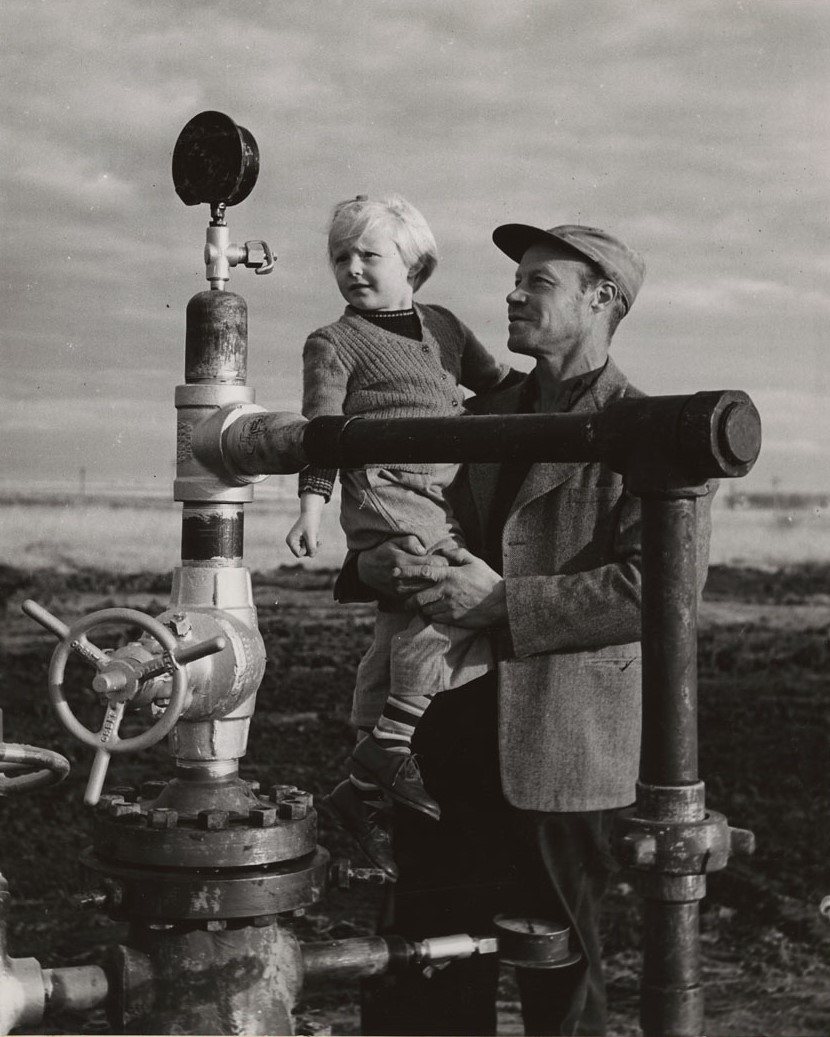
Farmer and son with a new oil wellhead on their property in Virden, Manitoba, 1951, Canada. Department of Manpower and Immigration / Library and Archives Canada.

Chairperson’s Message
It’s my pleasure to present the 2024-2025 Annual Report for the Canada Agricultural Review Tribunal (CART).
This year, we continued to work hard to improve CART’s efficiency and access to justice.
Priority 1: Improving Timeliness
We continued to benefit from many of the initiatives we took over the past two years, including simplified communications with parties, holding all oral hearings virtually, and creating and providing rigorous training for our adjudicators.
Later in this report, we share the detailed statistics that demonstrate our improved timeliness. Briefly, compared to last year, this year it took us:
- 19% less time to make admissibility decisions;
- 28% less time to hold oral hearings;
- 27% less time to issue decisions following written hearings; and
- 27% less time to close our files.
Priority 2: Improving Access to Justice (A2J)
Our second priority at CART continued to be to improve the accessibility of our services.
In April of 2024, we received a report from an access to justice (A2J) expert. The report recommended ways that CART can improve its A2J, and later in this report, we outline some of these ideas.
Due to the guidance we received from our stakeholders on the Advisory Committee, on April 10, 2024, I met with the Honourable Lawrence MacAulay, who was at the time the Minister of Agriculture and Agri-Food. Because unnecessary processes can act as a barrier to parties seeking access to justice, we recommended that the Minister amend the regulatory requirement that electronically submitted applications also be sent by registered mail or courier. Pending regulatory change and given the Federal Court of Appeal’s decision in Prairie Pride Natural Foods Ltd. v. Canada (Attorney General), 2023 FCA 152 at para. 25, we are no longer enforcing that requirement.
Closing Thoughts
I am so proud of the thoughtful work that the CART adjudicators and the staff of the Administrative Tribunals Support Service of Canada (ATSSC) performed in 2024-2025, and I look forward to sharing more news about our efforts with you in next year’s report.
In the meantime, if you have ideas on how we can continue to become more efficient and accessible, please contact us. The more ideas we have, the better!
Sincerely,

Emily Crocco
Chairperson,
Canada Agricultural Review Tribunal
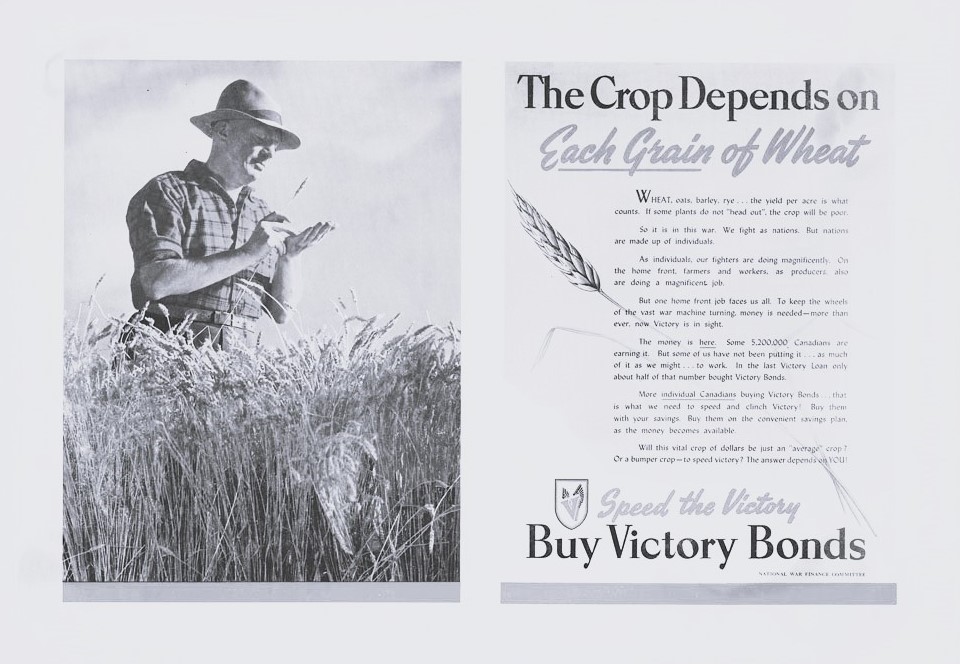
Wheat victory (war) bonds: The crop depends on each grain of wheat, Victory bond, ca. 1939-1945 / Library and Archives Canada / Acc. No. 1983-30-1063.
CART’s Jurisdiction and Mandate
The Canada Agricultural Review Tribunal (CART) determines the validity of alleged violations of agriculture and agri-food laws and the associated penalties.
CART makes its decisions independently from the government.
CART has one full-time Chairperson and three part-time adjudicators, all of whom are appointed by the Governor in Council. During the 2024-2025 fiscal year, CART’s adjudicators were Emily Crocco (who was also its Chairperson), Patricia Farnese, Geneviève Parent and Marthanne Robson.
CART receives support from the Administrative Tribunals Support Service of Canada (ATSSC). For example, CART receives registry, legal, communications and administrative support from the ATSSC.
Overview of Our Work in 2024-2025
| 2024-2025 | 2023-2024 | 2022-2023 | |
|---|---|---|---|
| New Files Received During Fiscal | 66 | 42 | 35 |
| Number of Active Files at Start of Fiscal Year | 31 | 20 | 37 |
| Hearings Held | 38 | 22 | 23 |
| Written Hearings | 12 | 4 | 14 |
| Oral Hearings | 26 | 18 | 9 |
| Number of Files Closed | 65 | 31 | 52 |
| Inadmissible | 6 | 4 | 14 |
| Withdrawn | 16 | 13 | 15 |
| Decisions on Merits | 43 | 14 | 23 |
| Outstanding Files at End of Fiscal Year | 32 | 31 | 20 |
Highlights from 2024-2025
New Files
- There has been consistent growth in caseload year over year.
- The growth accelerated significantly from 2023-2024 to 2024-2025 (57% increase).
- Over a two-year period (from 2022-2023 to 2024-2025), CART’s new caseload increased by 89%.
Hearings and Decisions
- 2024-2025 showed a sharp increase in the number of hearings held — CART held nearly 73% more hearings than the previous year, and over 65% more than two years ago.
- The number of decisions on merits more than tripled compared to last year (207% increase) and nearly doubled compared to two years ago (87% increase).
Closed Files
- The number of files CART closed more than doubled this year compared to last.
- This 110% spike reflects improved file-processing efficiency and is directly related to the increase in hearings held and decisions issued.
Merit Decisions by Outcome
| Year | Total Decisions | Confirmed | Varied | Cancelled |
|---|---|---|---|---|
| 2024-2025 | 43 | 27 | 5 | 11 |
| 2023-2024 | 14 | 12 | 1 | 1 |
| 2022-2023 | 23 | 19 | 0 | 4 |
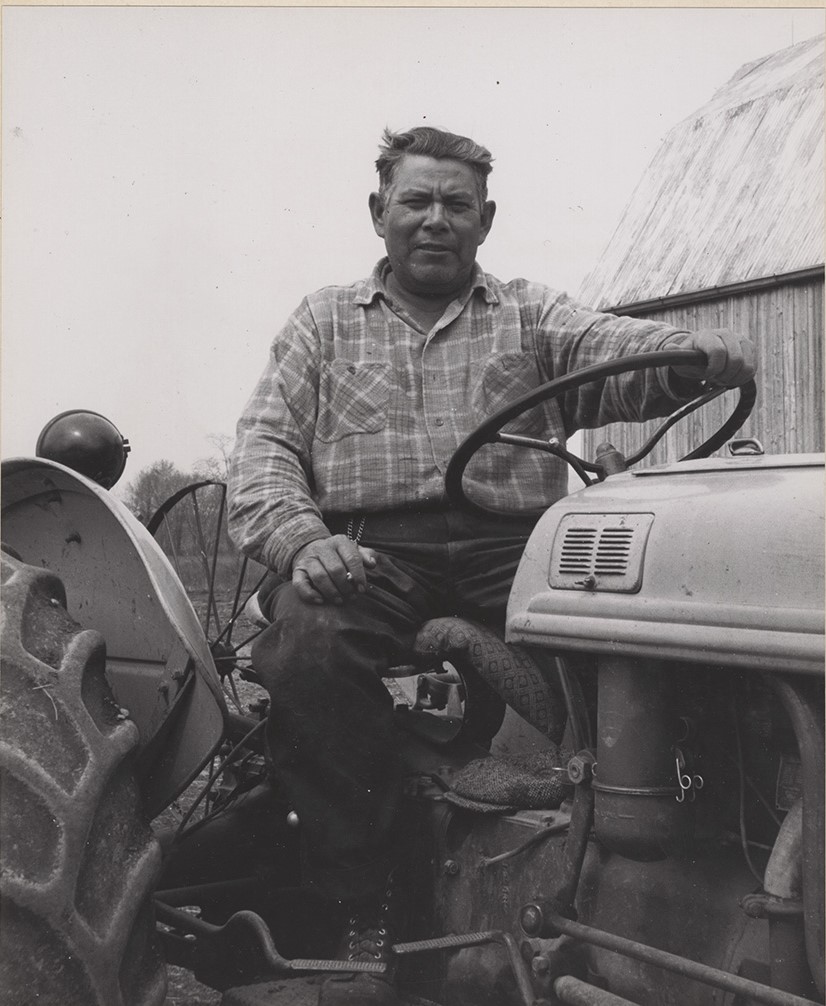
Chief William Isaac Hill is a successful dairy farmer, 1959. Department of Citizenship and Immigration / Library and Archives Canada / Department of Indian Affairs and Northern Development fonds / e011308290.
Parties’ Identities
In 2024-2025, 58% of applicants in new cases were self-represented, 38% were represented by a lawyer, and 4% were represented by a family member or friend. By comparison, in 2023-2024, 70% of applicants were self-represented, while 30% had legal representation.
While a relatively small number of applicants had representation in 2024-2025, a full 100% of CART’s respondents were represented.
In 2024-2025, the respondents in CART’s new files were:
- The Canada Border Services Agency (42%),
- The Canadian Food Inspection Agency (38%),
- The Minister of Public Safety and Emergency Preparedness (16%),
- The Minister of Agriculture and Agri-Food Canada (2%), and
- Health Canada (2%).
Timeliness of CART’s Decision-Making
The following table shows the average number of days it takes for key CART processes.
| 2024-2025 | 2023-2024 | 2022-2023 | |
|---|---|---|---|
| Admissibility | |||
| To issue an admissibility decision | 21 | 26 | 38 |
| Written Hearings | |||
| For a request to be heard when proceeding by written submissions | 93 | 102 | 222 |
| For a decision to be issued following a written hearing | 16 | 22 | 211 |
| To close a file (from start to finish) when heard by written submissions | 112 | 124 | 433 |
| Oral Hearings | |||
| For a request to be heard when proceeding by oral hearing | 207 | 470 | 650 |
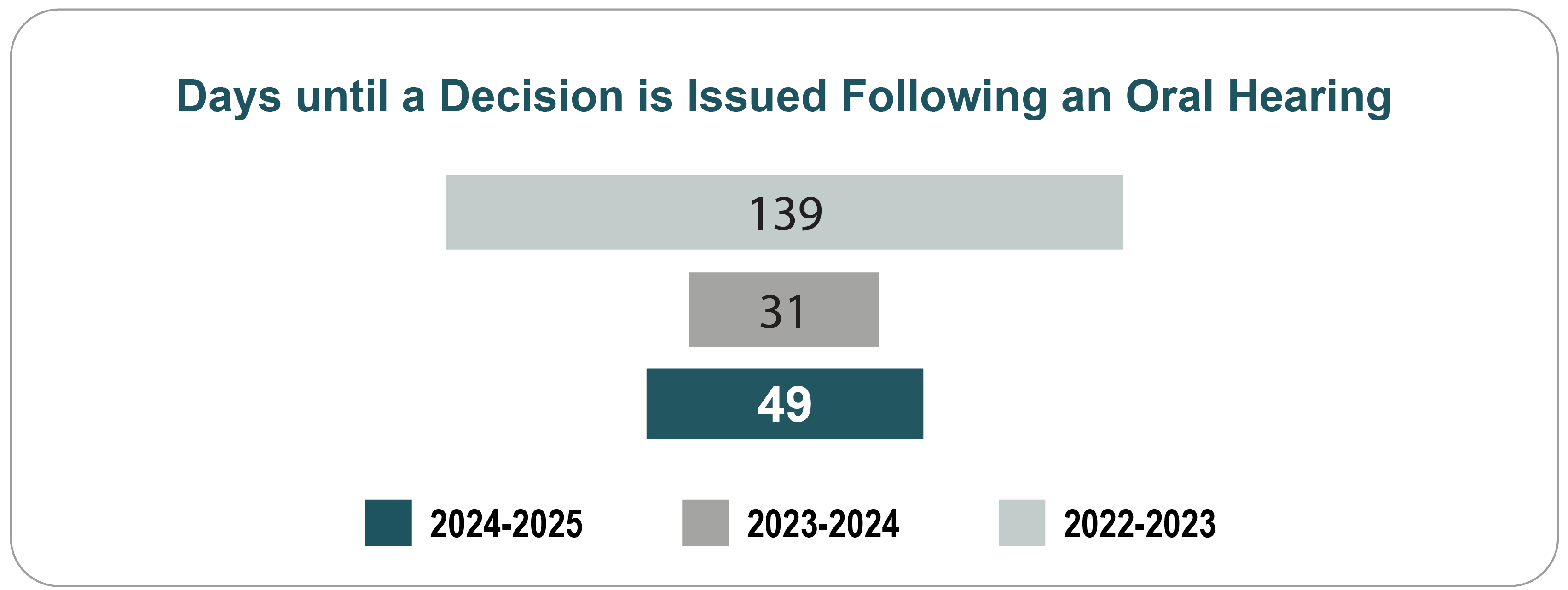
| For a decision to be issued following an oral hearing | 49 | 31 | 139 |
| To close a file (from start to finish) when heard by oral submissions | 268 | 501 | 789 |
| Online Publishing | |||
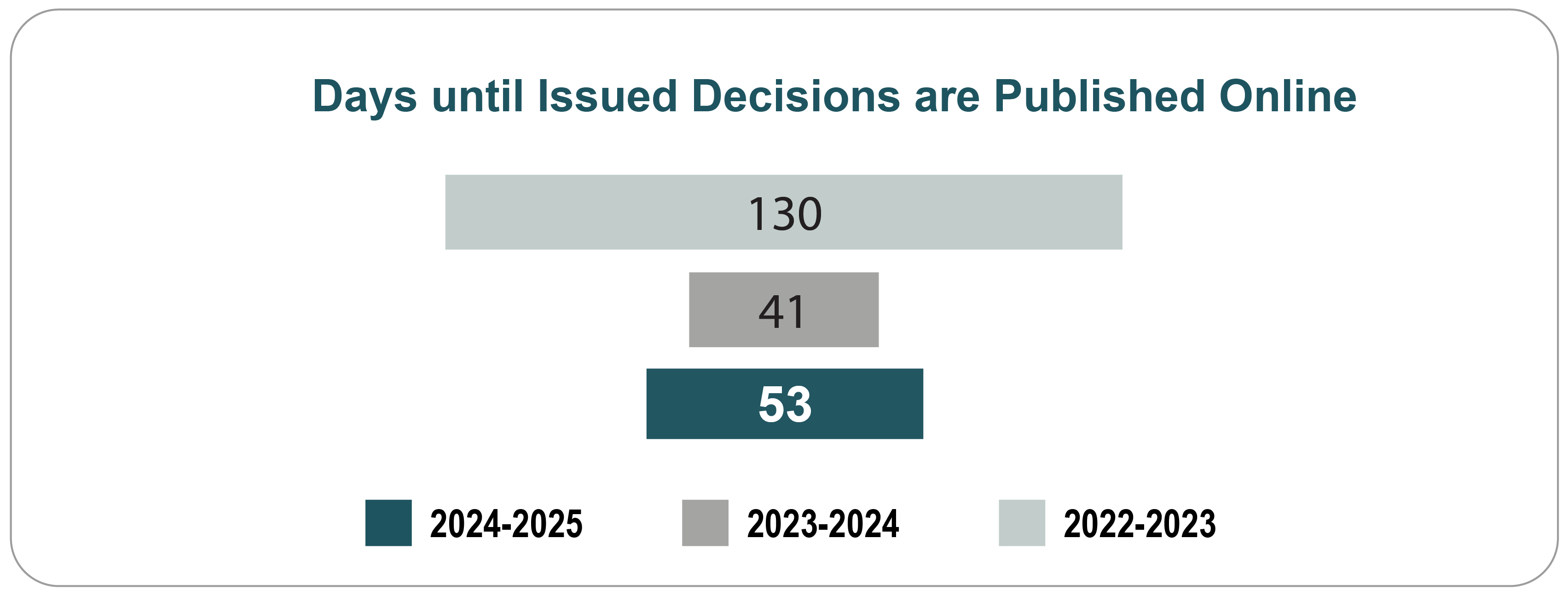
| For decisions to be published online after they are issued | 53 | 41 | 130 |
| Total Number of Days, All Files (Whether Heard Orally or in Writing) | |||
| For a file to be closed after initial request is filed | 172 | 234 | 371 |
Once again this year, CART demonstrated a marked improvement in timeliness across key indicators, including:
Vincent Harris is Chief of the Seabird Island Indian band near Agassiz, British Colombia, ca. 1961-1962. Department of Citizenship and Immigration / Library and Archives Canada / Department of Indian Affairs and Northern Development fonds / e010759211.
- Days to Issue an Admissibility Decision
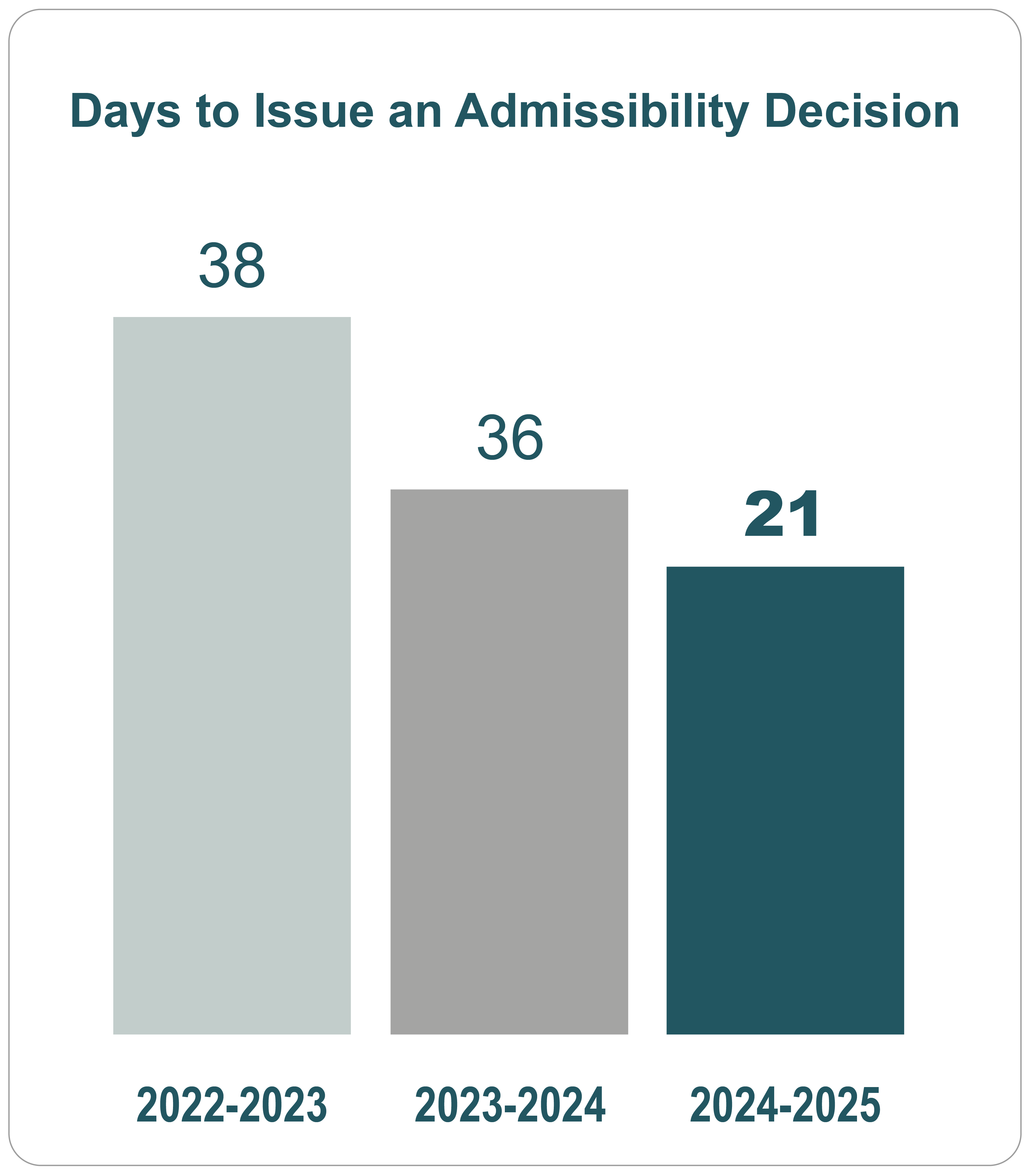
- The average time to determine the admissibility of a request for review dropped to 21 days in 2024-2025, well within CART’s 30-day service standard. This represented a 19% improvement over last year, and a 45% improvement since 2022-2023.
- Days for a Request to be Heard (Oral Hearing)
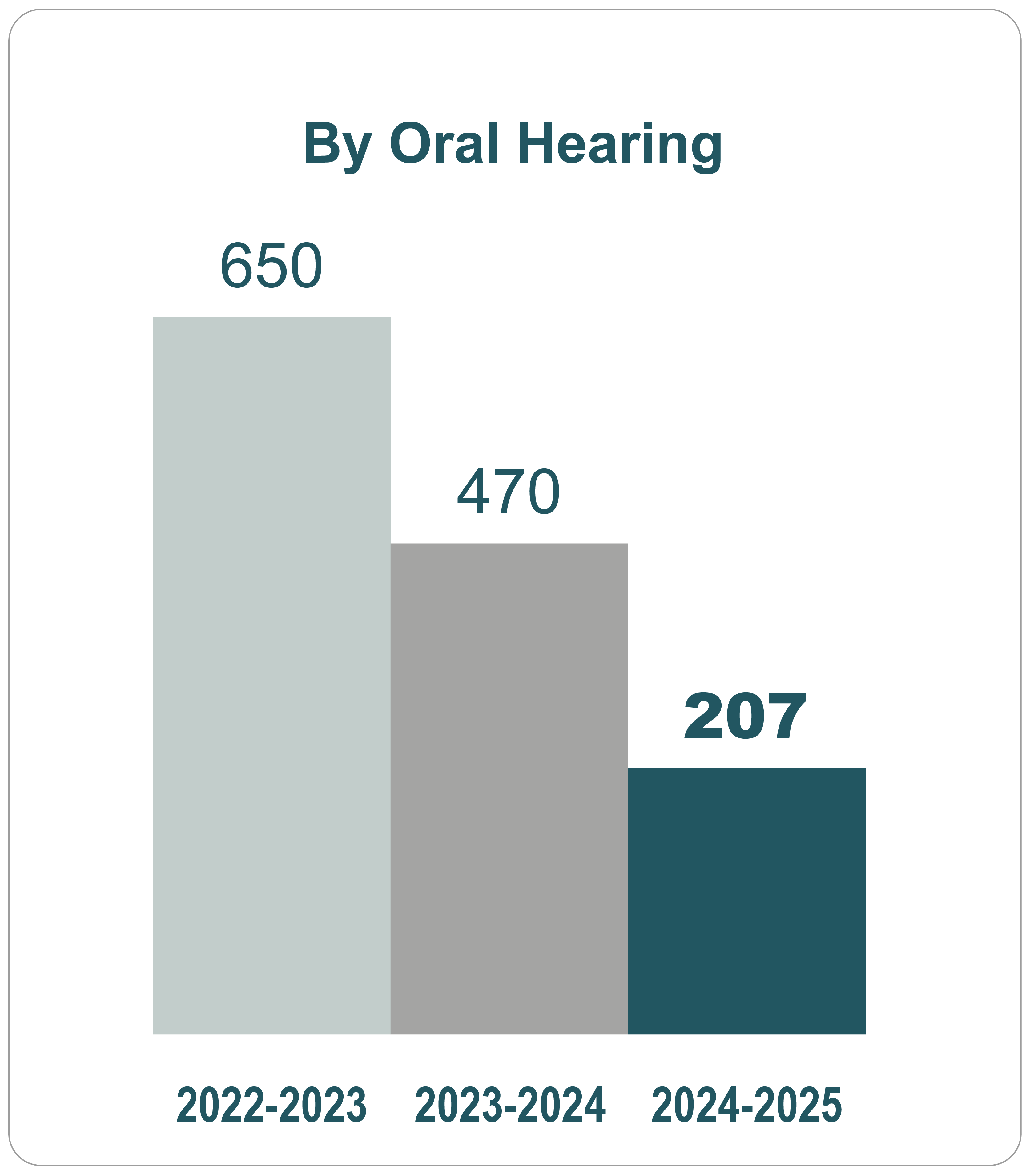
- The average time to hear a request by oral hearing has dropped by 28% in 2024-2025 (207 days) compared to the previous year. Despite the substantial improvement, this performance is still 57 days (38%) over CART’s 150-day service standard.
- Days for a Request to be Heard (Written Submissions)
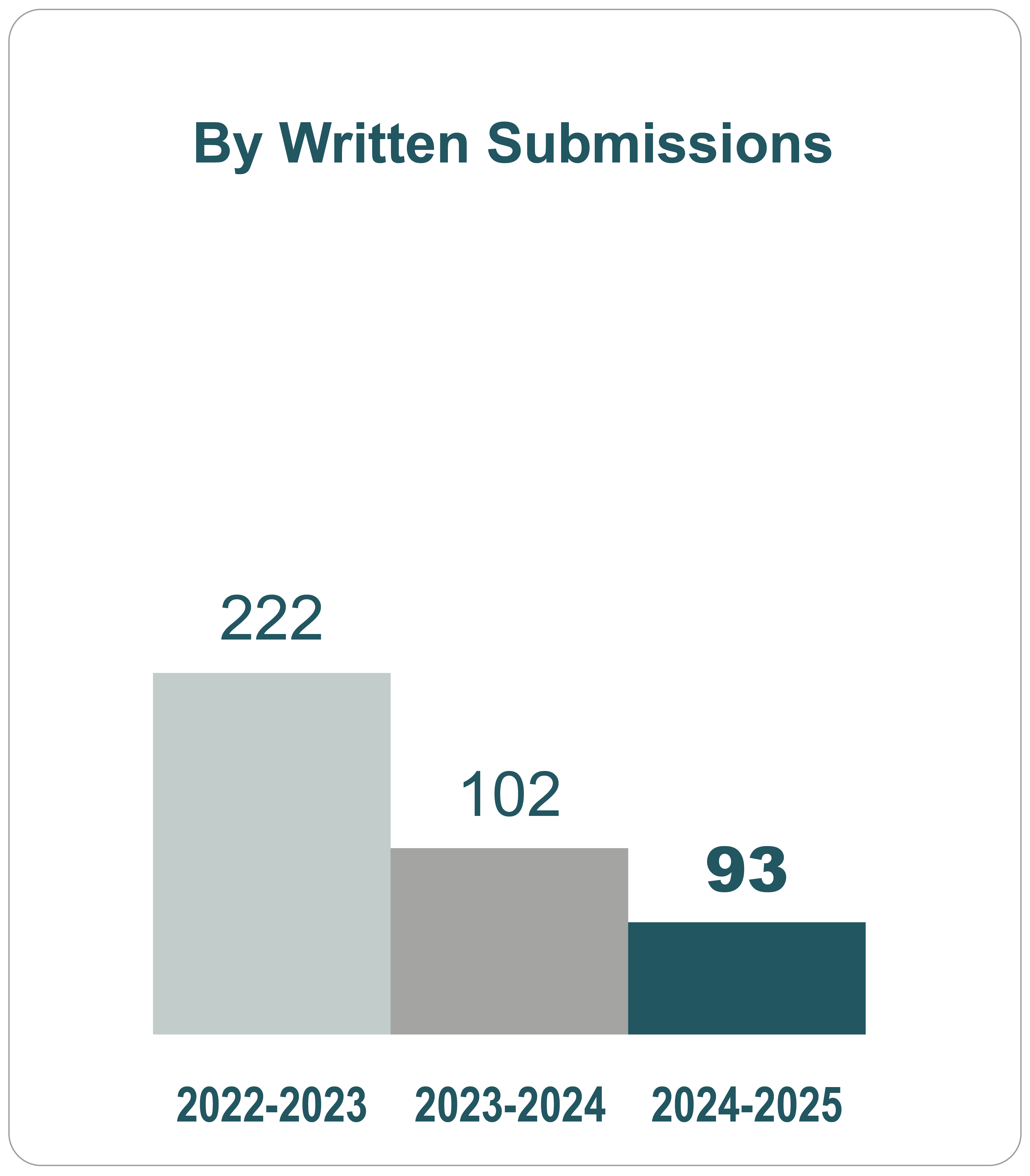
- The average time to hear a request by written submissions is down to 93 days, a 9% improvement compared to the previous year. The 2024-2025 average is just 3 days over CART’s 90-day service standard, showing strong progress toward meeting the standard.
- Days until a Decision is Issued Following a Written Hearing
- CART issued decisions an average of just 16 days after a written hearing—an improvement of 27% over last year and a remarkable 92% faster than in 2022-2023. Both 2023-2024 and 2024-2025 are well within CART’s service standard of 30 days.
- Time to Close a File
- The average time it took for CART to close a file has dropped to less than 6 months in 2024-2025. This represented a 27% improvement over last year, and a 54% improvement since 2022-2023.
That said, there were some reductions in timeliness this past year at CART:
- Days until a Decision is Issued Following an Oral Hearing
- Following an oral hearing, it took CART 49 days on average to issue a decision, a 58% rise from last year, exceeding CART’s 30-day service standard by 19 days.
- Days until a Decision is Translated and Published Online
- Once a decision was issued, it took CART an average of 53 days to have it translated and published online. This represented a 58% increase compared to last year, exceeding the service standard by 23 days. Despite this, the publication speed remained significantly better than two years ago (about 65% faster).
CART’s and the ATSSC’s teams are working hard so that, next year, CART will meet more of its service standards. We look forward to reporting on our work in that regard in our next annual report.
Notable Trends
Caseload Processing Times
Days to Issue an Admissibility Decision
Description
Days to Issue an Admissibility Decision
- 2022-2023: 38
- 2023-2024: 36
- 2024-2025: 21
Consistent Year-Over-Year Improvement
- There has been a steady decrease in the time taken to issue admissibility decisions:
- 12 days from 2022-2023 to 2023-2024 (a 32% decrease)
- 5 days from 2023-2024 to 2024-2025 (a 19% decrease)
- 17 days total over two years (a 45% decrease)
What We Did
- CART has set an ambitious 30-day service standard to determine whether a request is admissible.
- This year, we have consistently outperformed this standard. This achievement was due to removing unnecessary administrative steps and by the Registry’s increasingly efficient processing of requests for review.
Days for a Request to be Heard
By Oral Hearing
Description
By Oral Hearing
- 2022-2023: 650
- 2023-2024: 470
- 2024-2025: 207
Significant Reduction Over Three Years
- The time to hear a request by oral hearing has dropped dramatically:
- 180 days from 2022-2023 to 2023-2024 (about a 28% decrease)
- 263 days from 2023-2024 to 2024-2025 (about a 56% decrease)
- Overall, a reduction of 443 days (about 68%) from 2022-2023 to 2024-2025.
What We Did
- As part of a new streamlined process, CART now schedules hearings earlier in the review process.
- A hearing date is set as soon as the parties are informed that the request is admissible. At the same time, most procedural steps are outlined, providing the parties with a clear understanding of what to expect moving forward.
CART is hopeful that, going forward, this new process will allow cases to be heard within 150 days of receiving a request for review.
By Written Submissions
Description
By Written Submissions
- 2022-2023: 222
- 2023-2024: 102
- 2024-2025: 93
Steady Improvement Over Three Years
- The time to hear a request by written submissions has dropped dramatically:
- 120 days from 2022-2023 to 2023-2024 (about a 54% decrease)
- 9 days from 2023-2024 to 2024-2025 (about a 9% decrease)
- Overall, a reduction of 129 days (about 58%) from 2022-2023 to 2024-2025.
What We Did
CART has implemented a streamlined process that significantly accelerates the scheduling of written hearings:
- Hearings are now scheduled earlier in the review process, when the parties are informed that the request is deemed admissible. At the same time, a timeline for the filing of written submissions is given, giving parties a clear roadmap of what to expect.
CART is optimistic that this approach will help ensure that cases proceeding by written submissions are heard within 90 days of receiving a request for review.
Days until a Decision is Issued Following an Oral Hearing
Description
Days until a Decision is Issued Following an Oral Hearing
- 2022-2023: 139
- 2023-2024: 31
- 2024-2025: 49
Ray Knight’s Pig Ranch, Raymond, Alberta, Canada. Department of Mines and Resources / Library and Archives Canada / PA-021647.
Sharp Improvements, Followed by a Slight Increase
In 2023-2024, there was a dramatic reduction of 108 days in the average decision time following an oral hearing—from 139 to 31 days—representing a 77% improvement. However, in 2024-2025, the average rose to 49 days, an increase of 18 days or 58% compared to the previous year. Still, compared to 2022-2023, this reflects an improvement of 65% less time to issue a decision after an oral hearing.
What We Did
This significant improvement is largely due to enhanced efficiency in the decision-writing process:
- Members have adopted more focused and structured drafting practices, allowing them to articulate decisions more clearly and concisely.
- Internal supports (including training materials) and templates have been refined to streamline the writing process while maintaining quality and consistency.
- Early case preparation and better pre-hearing organization ensure that members are well-positioned to begin drafting immediately after a hearing concludes.
These changes have contributed to faster turnaround times without compromising the quality or thoroughness of decisions.
Days until Issued Decisions are Published Online
Description
Days until Issued Decisions are Published Online
- 2022-2023: 130
- 2023-2024: 41
- 2024-2025: 53
Overall Progress Over Three Years
- The average publication time dropped sharply from 130 days to 41 days in 2023-2024, a decrease of 89 days or approximately 69%.
- Despite a 29% increase in 2024-2025, the average time to publish decisions has improved by 77 days over the two-year period (from 130 to 53 days), representing a 60% overall reduction.
While these indicators mark significant progress, meeting the 30-day service standard for publishing decisions in both official languages remains a challenge for CART. We are committed to achieving this goal in the upcoming fiscal year to ensure timely public access to our decisions. In fact, to support this commitment, CART has implemented a new translation and publishing process designed to further reduce delays and improve performance in this area moving forward.
Improving Access to Justice (A2J)
In April of 2024, CART received a report from Paul Aterman, an access to justice (A2J) expert. Mr. Aterman’s report noted that “most courts and tribunals design their processes around the needs of ‘insiders’, the people who work in the systems (judges or tribunal members, lawyers, registry staff) rather than the needs of users.”
A2J principles address this problem by taking a people-centered approach to justice, seeking to remove barriers and put the individual at the heart of justice responses.
Mr. Aterman’s report recommended ways that CART can eliminate barriers that may prevent applicants from accessing justice.
The report made recommendations on how CART can improve its A2J. Below is a summary of some of these recommendations and how CART has implemented them:
Poultry and eggs, Miss Maria Ravida wields a swift, sharp knife as she cuts open the chickens to prepare them for the dressing operation along the assembly line, April 6, 1959, Ontario, Canada. Department of Manpower and Immigration / Library and Archives Canada.
A2J Initiatives
Simplify CART’s Website
We did so by improving website navigation and adopting plain language.
Provide Free Interpretation at CART’s Oral Hearings
We did so. No matter the language, we added the option for free interpretation to the types of accommodation hearing participants can request.
Provide Training to our Team
We did so by providing training on key A2J considerations such as unconscious bias, active adjudication, and inclusivity.
Create a Members’ Code of Conduct
We did so with a Members’ code of conduct that sets out the ethical and professional responsibilities of CART members to ensure fair, impartial, accessible, and timely decision-making, with standards covering integrity, competence, collegiality, impartiality, confidentiality, and compliance with applicable laws and policies.
Create a Public Complaints Procedure
We did so with a public complaints procedure that ensures Members behave in a fair, transparent, credible and impartial way.
Monitor the Number of Self-represented Applicants
We did so to ensure we understand and address barriers encountered by self represented applicants. CART monitors the number of self represented parties and assesses Member interactions with self-represented applicants. This monitoring has led us to simplify and clarify information for self-represented applicants in resources such as A Guide to Our Process.
CART’s Advisory Committee has also assisted in the context of A2J, ensuring that procedures and practices are as fair, accessible and efficient as possible.
Notable Cases
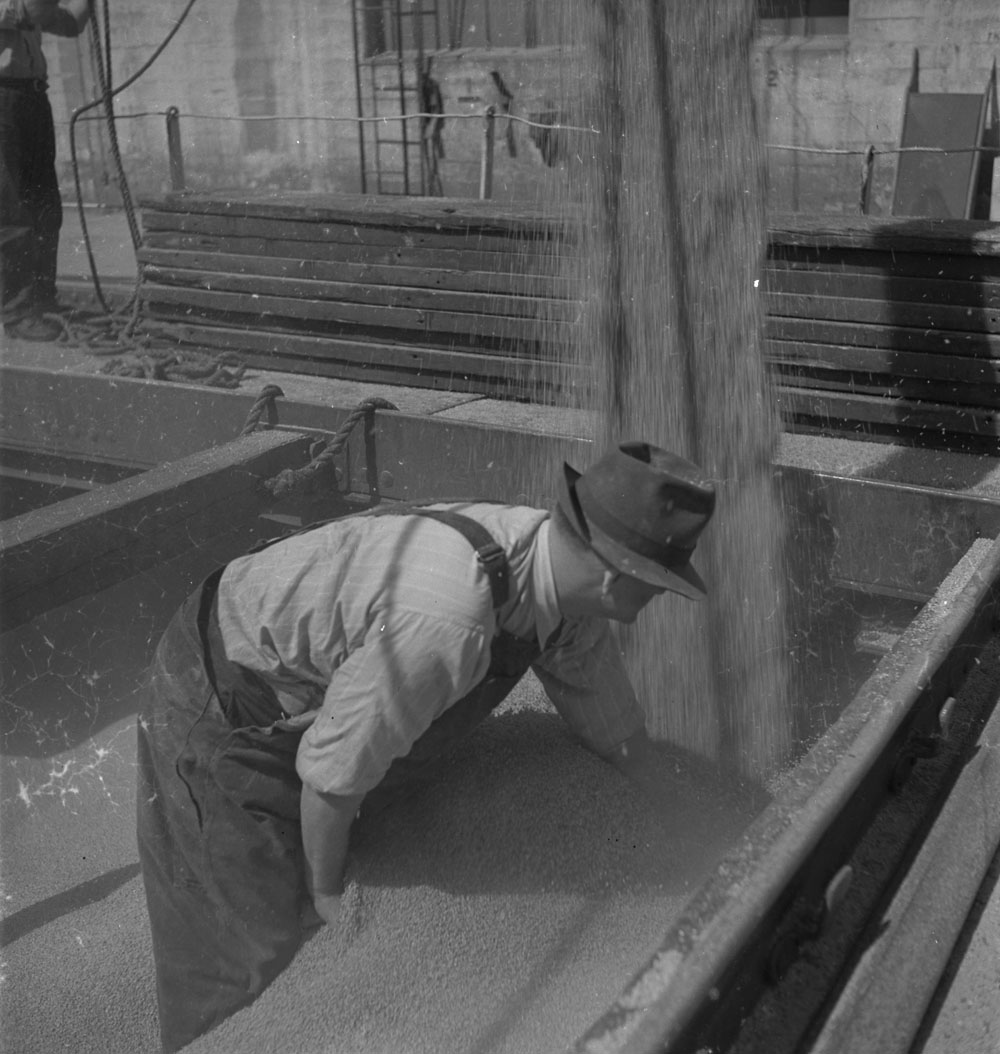
Saskatoon and wheat, man loading grain, Saskatchewan, ca. 1939–1951, Ronny Jacques / Library and Archives Canada.
Arguments to Cancel a Notice of Violation Issued at the Border
When a traveller fails to declare food, plants or animal products they are bringing into Canada, the Canada Border Services Agency (CBSA) may issue the traveller a notice of violation and penalty. Travellers can apply to CART to have the notice reviewed and potentially cancelled.
Two notable requests for review this year were the following:
In Khayon v Canada Border Services Agency, 2024 CART 07, a notice was issued against the applicant for allegedly importing chicken into Canada without declaring it, contrary to subsection 16(1) of the Health of Animals Act. The CBSA imposed a penalty of $1,300.
The applicant asked CART to review the notice. She had been travelling with her adult daughter, and the chicken was found in carry-on luggage that was being held by the daughter while both individuals waited for their checked luggage. The notice was issued to the applicant, but the daughter’s passport number was recorded in the notice.
CART found that the CBSA failed to prove that the applicant committed the violation. CART also noted that the obligation to declare is on the person who is importing the product, and that the person who completes their own declaration is not liable for undeclared animal products imported by other adults in their household. The notice was cancelled.
- In Tissier v Minister of Public Safety and Emergency Preparedness, 2024 CART 12, a traveller argued before CART that he only committed the violation because the CBSA failed to provide him with French language services. CART did not accept this argument, noting that the traveller had filled out the declaration form in English and declined French language service when offered.
Arguments for a Reduced Penalty
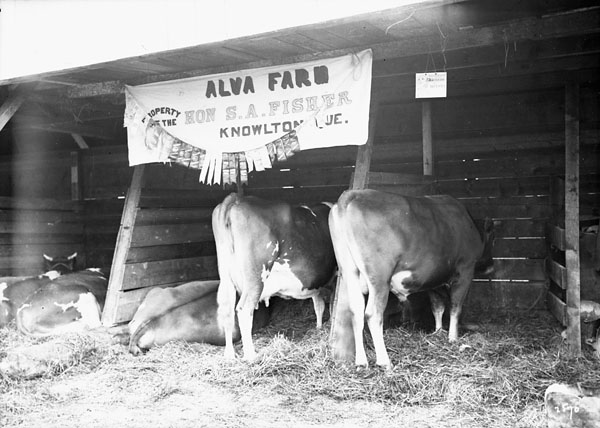
Hon. S.A. Fisher’s Guernsey cows, Sherbrooke, Quebec, 1912, William James Topley / Library and Archives Canada / PA-010431.
Travellers who have received a notice of violation can also ask CART to review the amount of a penalty. Many travellers argue that the penalty should be reduced.
Where the fact of a violation has been proven, CART cannot reduce or cancel a penalty that was calculated in accordance with the relevant regulations.
This year, some applicants unsuccessfully argued the following:
- Because the traveller applied for a review of the notice by CART within 15 days of receiving it, they should get a 50% reduction of the penalty. Under the regulations, the penalty can only be reduced by 50% if the traveller pays the penalty (Mereku v Canada Border Services Agency, 2024 CART 28).
- A penalty of $1300 should be reduced because a Government of Canada website said that penalties range from 25% to 80% of the value of the seized goods. In this instance, the applicant argued that the seized goods were only worth around $100. CART found that the penalty was calculated in compliance with the regulations and therefore couldn’t be reduced. CART agreed, however, that the website was misleading and recommended that it be amended (Walters v Canada Border Services Agency, 2024 CART 21).
Transportation of Animals – Overcrowding
Under the Health of Animals Regulations (HA Regulations), it is a violation to load or transport animals in overcrowded conditions. In two notable overcrowding cases this year, CART found that the Canadian Food Inspection Agency (CFIA) had failed to prove that the containers were overcrowded:
- In 1230890 Ontario Limited v Canadian Food Inspection Agency, 2024 CART 06, CART considered whether overcrowding had occurred because, due to the number of animals in the container, the animals were likely to become overheated. During the hearing, the CFIA presented after the fact weather reports but did not submit weather forecasts that would have been available to the applicant at the time that they were loading the animals. As a result, CART found that the CFIA had failed to prove that it was likely that the temperature would require reducing the load to avoid the animals overheating.
- In Vernla Livestock Inc. v Canadian Food Inspection Agency, 2024 CART 20, CART found that the CFIA had not provided reliable evidence to demonstrate the average weight of the hogs in each load. Without that evidence, CART was unable to determine the allowable loading density, which was necessary for assessing whether there was overcrowding.
Transportation of Animals – Determining the Animal’s Physical Condition at the Time of Loading
In general, it is a violation under subsection 139(1) of the HA Regulations to load, confine or transport an unfit animal.
In 9126-5553 Québec Inc. v Canadian Food Inspection Agency, 2025 CART 06, the issue was whether subsection 139(1) applies where an animal becomes unfit during transport.
In considering whether subsection 139(1) applied in this case, CART noted that subsection 139(4) of the HA Regulations creates a separate violation when an animal becomes unfit during transport. By contrast, CART found that the relevant time for determining whether an animal is unfit for transport under subsection 139(1) of the HA Regulations is at the time of loading. Any other interpretation would make subsection 139(4) meaningless.
CART therefore cancelled the notice because the CFIA had not established that the animal in question was unfit at the time of loading.
Inadmissibility Decision: Beyond the Time Limit to Request a Review
The Agriculture and Agri-Food Administrative Monetary Penalties Regulations state that individuals must make their request for review within 30 days after the day the notice of violation was served on them.
How strictly this time limit must be applied arose in Peters v Canada Border Services Agency, 2025 CART 05. Initially, the applicant filed a request to have her notice of violation internally reviewed by the CBSA, which is a parallel review procedure set out under the Agriculture and Agri-Food Administrative Monetary Penalties Act. Shortly thereafter, she also requested that CART review the notice but made this request after the 30-day time limit. CART informed her that she could not have reviews with CART and the Minister at the same time and she needed to choose one. She decided to proceed with a review by CART.
CART then had to determine whether the request for review was admissible given it was filed after the 30-day time limit. CART found that it did not have the authority to admit the request for review, given decisions that have been made by the Federal Court of Appeal on this issue. As a result, the request was inadmissible.
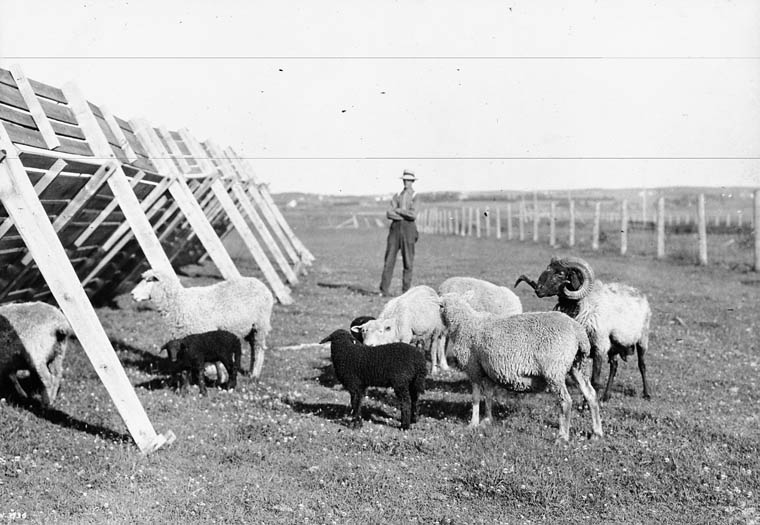
Karacul Sheep Persian Lamb, Bunberry Farm, Charlottetown, P.E.I., 1914, John Woodruff / Library and Archives Canada, Other accession no.: 1939-459 NPC.
Advisory Committee
CART’s Advisory Committee helps ensure that CART’s procedures and practices are as fair, accessible and efficient as possible. For more information about the role and composition of the Advisory Committee, please visit CART’s website at: Advisory Committee - Canada Agricultural Review Tribunal.
The external members of the 2024-2025 Advisory Committee were:
- Pierre Lampron, Chair of the Advisory Committee, Second Vice-President of the Canadian Federation of Agriculture
- Moya McAlister, Communications Manager, National Self-Represented Litigants Project
- Skyler Veazey, Regulatory and Technical Director, Canadian Poultry & Egg Processors
- Jorge Correa, Vice-President, Market Access and Technical Affairs, Canadian Meat Council
- Russell Reitsema, Vice-President, BC Young Farmers
- Robert Scriven, Partner, Bennett Grant LLP
- Sherri-Lynn Foran, Director, Enforcement Appeals and Litigation Division, Canada Border Services Agency
- Melanie Nobre, Manager, National Enforcement and Investigations Office, Canadian Food Inspection Agency
- Chris Araujo, Counsel, Legal Services, Canadian Food Inspection Agency
- Jan Holmes, Policy Analyst, Portfolio Coordination Secretariat, Deputy Minister’s Office, Agriculture and Agri-Food Canada
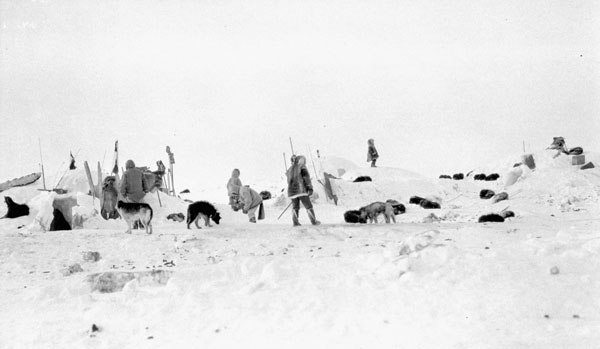
Kitlinermiut seal hunting camp, Coronation Gulf region, Nunavut, April 1931, Richard S. Finnie. Department of Indian Affairs and Northern Development fonds / Library and Archives Canada / a101130-v6.
The Advisory Committee met four times during the 2024-2025 fiscal year. These meetings provided a valuable forum for discussion and collaboration to support CART’s mandate and enhance its operations. Key discussion points included the following:
- Proposed Amendments to CART Rules:
- The Committee reviewed and provided input on potential changes aimed at improving procedural clarity and efficiency.
- Access to Justice Initiatives:
- Members explored strategies to reduce barriers for self-represented litigants and improve public understanding of CART processes.
- Onsite Training for CART Members:
- The Committee planned the development and delivery of targeted training sessions for CART adjudicators.
- Satisfaction Survey:
- The Committee reviewed a draft questionnaire intended to gather feedback from CART users, offering suggestions to ensure clarity, relevance and usefulness of the data collected.
These discussions reflect CART’s ongoing commitment to transparency, fairness and improving service delivery.
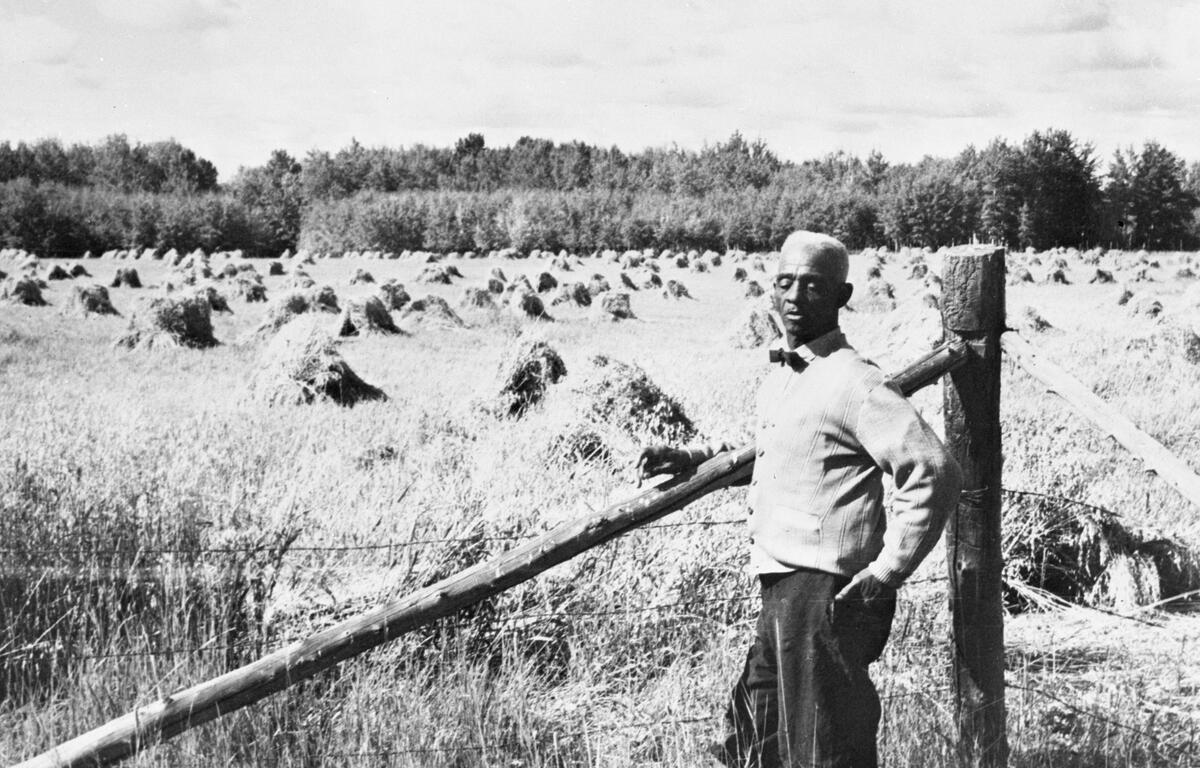
J. D. Edwards beside grain field, Amber Valley, Alberta, ca. 1947-1949, (CU1153718) by Unknown. Courtesy of Collection, Libraries and Cultural Resources Digital Collections / University of Calgary.
Contact Information
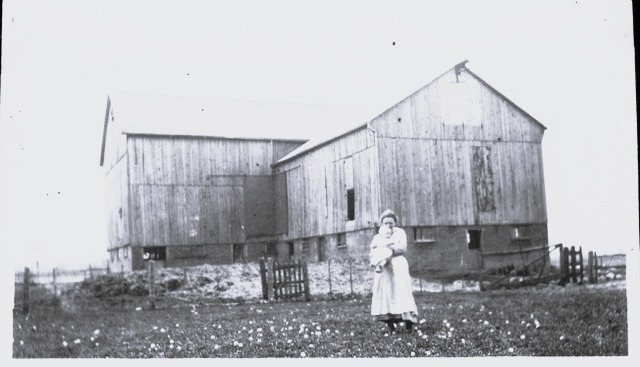
Mary Regan Bannon and son Michael, Perth County, Logan Township, Ontario, 1921, used with permission from the private collection of Brigid Regan Folkes.
CART’s offices are located in the National Capital Region, the traditional unceded territory of the Algonquin Anishinaabe people.
You can reach CART at the following coordinates:
- Our website:
- www.cart-crac.gc.ca
- By email:
- infotribunal@cart-crac.gc.ca
- By telephone:
- 613-943-6405
- By fax:
- 613-943-6429
- By mail:
- Canada Agricultural Review Tribunal
344 Slater Street, 15th Floor, Suite 300
Ottawa, Ontario K1A 0B7 - Our decisions:
- Decisions - Canada Agricultural Review Tribunal
- RSS FEED:
- RSS Feeds - Canada Agricultural Review Tribunal